Sheep Handling & Restraint.
Sheep are generally docile animals that rarely show aggressive behaviour, however complacency, particularly around rams is not advised, especially during breeding season as they can become very aggressive and have the capacity to cause serious injury to the handler or bystander.
Sheep are creatures of habit: they learn what is expected of them quickly or they revert to copying what the rest of the flock is doing, making them fairly easy to herd. They are also very social animals that prefer to be kept in a group so they are easier to work with if other sheep are within sight of them, they will become easily agitated if separated from the flock for a long period of time.
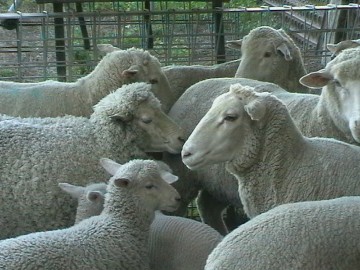
Following are some essential practices of the sheep industry:
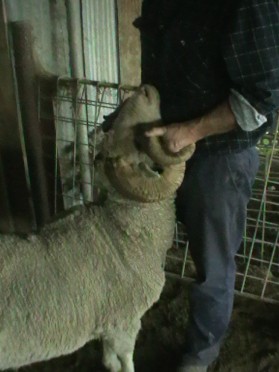
|
Level of competency: |
Actions required to achieve this competency level: |
|
Poor. |
The student refuses to enter the sheep yard and/or makes no attempt to approach a sheep. |
|
Developing. |
The student shows little patience and lacks common sense and confidence when approaching a sheep.They fail to take advice of those with more experience. They approach the sheep from all angles, causing stress to the animal. They have trouble catching the sheep and continue to move legs when rolling. The student attempts to lift with their back rather than the legs.
|
|
Some skills observed. |
The student is not confident when working around sheep however they express interest and take note of advice. They are aware of how to approach the animal and secure it, but experience difficulty when rolling. More practice is required. |
|
Highly competent. |
The student is confident and aware of the surrounding sheep. They have planned which animal to approach and are quick and efficient when catching and rolling. The student lifts the animal correctly, and displays ample common sense and patience in the sheep yards. |
A video demonstration of how to roll a Merino ram. Note the swift, confident approach of the handler.
A video demonstration of how to approach an tip an ewe in a yard:
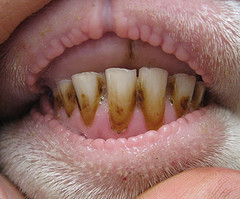
The teeth can be used to age sheep:
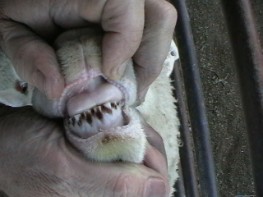
Cutting: loosing baby teeth, when a “lamb” changes to “wearer”. Adult teeth push baby teeth up:
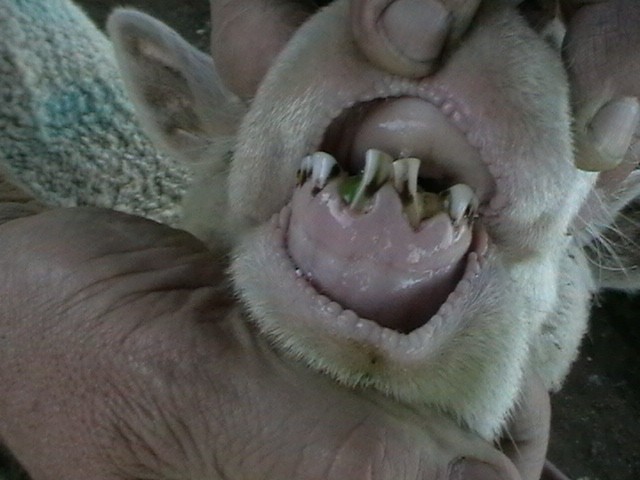
2 adult teeth, 1 year of age:
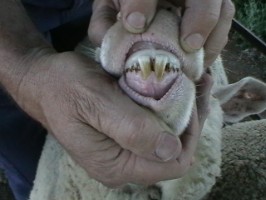
4 adult teeth, 2 years of age:
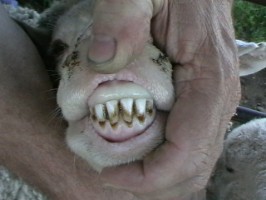
6 adult teeth, 3 years of age:
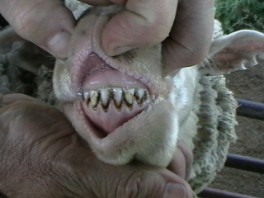
Full mouth: 8 permanent adult teeth, 4 years of age or older. Age from this point onwards is determined by the level of decay of the eight adult teeth.
These are important points to consider of some other essential practices of the sheep industry:
Safety points to remember:
Never look a ram directly in the eye when you are at its level: it will consider this a challenge to its territory.
Never lean against a yard fence with your knuckles wrapped around the fence, as the ram may charge at the fence unexpectably causing serious damage to your knuckles.
When lifting a ram over the fence, protect your back by carrying the weight through your legs and not putting unnecessary strain on your back.
Image source (banner image): http://www.watoday.com.au/news/lifeandstyle/pets/sheep-to-wear-greenhouse-masks/2008/10/09/1223145527931.html
Image source: (full mouth of teeth): http://www.flickr.com/photos/50697175@N00/3692703462
