Cattle Handling and Restraint.
Approaching and Moving Cattle in Yards:
Great care should be taken when approaching and handling cattle. They are powerful animals capable of inflicting severe injuries if not dealt with correctly. Handlers should always devise a plan of action for moving cattle before entering the yard. They must also remain calm but assertive in the presence of animals, and always have an escape plan in the case of the cattle becoming aggressive.
The diagram below illustrates a cow's flight zones:
Source: http://www.itla.net/Longhorn_Information/index.cfm?con=handling
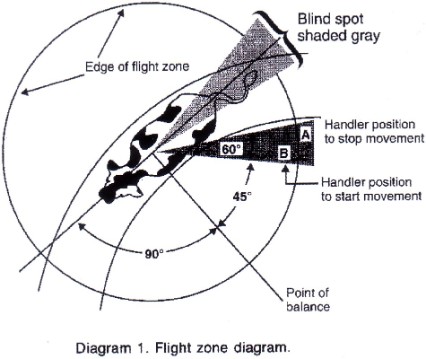
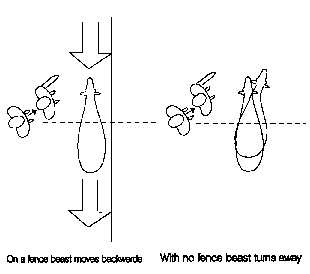
Approaching a cow from the flight zone allows the handler to move it around the yard or to another area. Walking confidently and calmly around the animal with outstretched arms will make it move away from you. This method allows for a safe distance between the animal and the handler.
Image source: http://www.dpi.nsw.gov.au/agriculture/livestock/beef/husbandry/general/handling-cattle
Evaluation of Competency:
|
Level of Competency:
|
Action required to achieve this competency level:
|
|
Poor |
Makes no attempt to enter the yard or once in the yard to move the cow.
|
|
Developing |
Shows little confidence around cattle. Hurries towards cow and/or does not outstretch arms. |
|
Some skills observed |
Shows some confidence around cattle. Makes attempt to move cow, may not go in desired direction. Unaware of behaviour demonstrated by the cattle. |
|
ompetent |
Confident in yard. Outstretches arms and able to move in desired direction. Aware of behaviours but may stress themselves and animal. |
|
Highly competent |
Remains calm and confident in the presence of cattle. Is aware of behaviours and reacts appropriately. Able to move cattle in desired direction. |
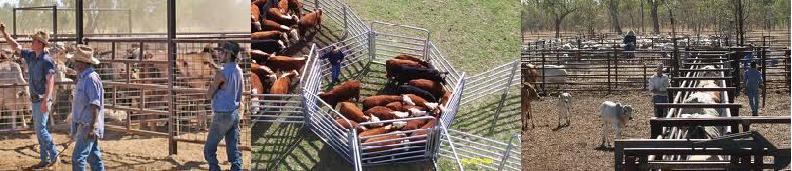
The cattle crush: moving cattle into a crush and the correct behaviours while examining the cow:
Before you begin moving cattle towards a crush, ensure only the gates you need to move them through are open. Also ensure that the last crush in the line is closed to prevent the cattle escaping out the other end.
Using the techniques outlined in the section above, move the cattle through the yards and into the crush area. If they are reluctant to move through the tighter areas, you can tap them on the hindquarters to keep them moving. Cattle should be moved through as calmly as possible to avoid stress and injury.
When the head is through the end of the gate, the crush should be lowered quickly to ensure the animal is caught around the neck, not around the front of the body. The back gate must then be closed to reduce movement of the animal and to allow inspection from behind.
Once in the crush, inspections can be carried out on the cow. Body condition can be scored, artificial insemination and pregnancy testing can be performed, and mouth health can be determined. When working in the vicinity of the head, personal safety is of high importance. It is also important not to stress the cow by hitting it or patting it on the head. Keep note of your body position relative to the cow to avoid injury, and when working with the head position your body so that it is stable and you can not be crushed between the cow and the bars of the crush.
|
Level of Competency:
|
Action required to achieve this competency level:
|
|
Poor |
Does not catch cow in crush, or causes injury. Acts inappropriately around animal. Has high chance of injury due to poor behaviour.
|
|
Developing |
Catches cow incorrectly. Does not demonstrate personal safety when inspecting the cow. Causes unnecessary stress to the animal. |
|
Some skills observed |
Can catch cow in crush. Is aware of cows behaviour but actions may still lead to injury. Stresses animal.
|
|
Competent |
Can catch cow correctly in crush. Carries out inspection safely. Some stress to animal.
|
|
Highly competent |
Can efficiently catch cow correctly in crush. Carries out inspections safely and efficiently. Causes minimal stress to animal.
|
Video demonstration of how to safely move a cow into and out of a cattle crush:
Source:http://www.youtube.com/watch?v=h0Fx8eNFXis
And a demonstration of some common mistakes when working with cattle:
Source: http://www.youtube.com/watch?v=DB8JTyXBjcc
Image sources (from top):
-http://www.j-franch.com/cattle.html
-http://www.savanna.org.au/km/station_management.html
-http://www.mmstockyards.com.au/gallery/cattlestockyardsgallery.php
-http://www.tripadvisor.co.uk/ShowUserReviews-g499643-d497692-r10692735-Wrotham_Park_Lodge-Chillagoe_Queensland.html
