Fish Handling.
Handling in the aquaculture industry is limited and should only occur during essential husbandry procedures. Fish should be anesthetised throughout the entire procedure to prevent stress. Ideally the time the fish is out of the water should be kept to an absolute minimum and should be under anethesia for the shortest time possible. Research has shown that stress in fish is a large contributor towards disease, unexplained mortalities and growth rates.
Anesthetisation of Fish:
This procedure is required to ensure the fish remains unconscious and immobilised during such procedures as:
-tagging
-surgery and blood collection
-physical condition examinations: weighing & measuring
-transportation
These procedures are all causes of acute stress in fish, hence the requirement for anaesthesia.
The procedure of anesthetisation of fish is as followed:
12-24 hours prior to anesthetisation the fish must be taken off feed. The targeted fish should be separated into a tank by itself and then a dose of the selected anaesthesia-(AQUI-S™ is the only legal anaesthesia in Australia for use in food fish and the recommended dosage is 15-20 mg L-1)is then applied to the tank water. Anesthetisation should occur within 15 minutes. The husbandry procedures should then be carried out efficiently to minimise the time the fish spends out of the water and the condition of the fish should be continually monitored. The fish is then placed in a free flowing recovery tank with ample supply of oxygenated water, recovery of the fish should occur within 5 minutes. The fish should be monitored in the 24 hour period following anesthetisation for signs of stress. Wash your hands thoroughly before and after handling the fish to ensure the biosecurity of the fish farm is maintained.
Common signs of stress include:
-Reduced activity and movement.
-Fish remains near the surface gasping for breath.
-Fish shows no interest in feed.
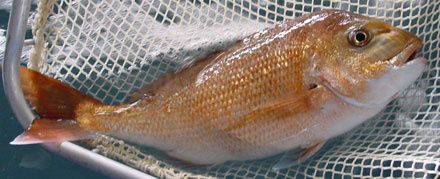
Fish that has been placed under AQU-IS anaesthesia.
Image source: http://www.aqui-s.com/Default.aspx?page=1528
|
Competency Level: |
Action required to achieve this level of competency: |
|
Poor. |
Makes no attempt to anesthetise fish OR applies incorrect dosage resulting in adverse effect on fish or death of fish. |
|
Developing. |
Follows steps correctly but with hesitation and so increases the time the fish is under the anaesthesia or out of the water. This results in the fish showing signs of stress in the 24 period following the procedure. |
|
Competent. |
Follows steps with confidence resulting in the shortest possible time for the entire process. Fish recovers within five minutes and shows no signs of stress over the following 24 hour period. |
Chronic stress in fish is caused from long periods of exposure to unfavourable biotic and abiotic conditions. Therefore it is important to regularly test the water quality to ensure oxygen levels, pH levels, temperature and ammonia, nitrogen, nitrite and nitrate levels are all suitable to the fish's needs.
These requirements vary within species so it is important to investigate the individual requirements of the species of fish you are keeping.
These conditions are monitored as follows using a variety of instruments such as a dissolved oxygen meter, thermometers and pH probes.
Image sources (from top):
-http://animals.howstuffworks.com/animal-facts/aquaculture1.htm
-http://www.flickr.com/photos/33842070@N00/page34/
- http://www.agricultureinformation.com/mag/?p=3107
-Image source: http://www.aqui-s.com/Default.aspx?page=1528
